The Trend Lifecycle: When to Buy In, When to Sit Out
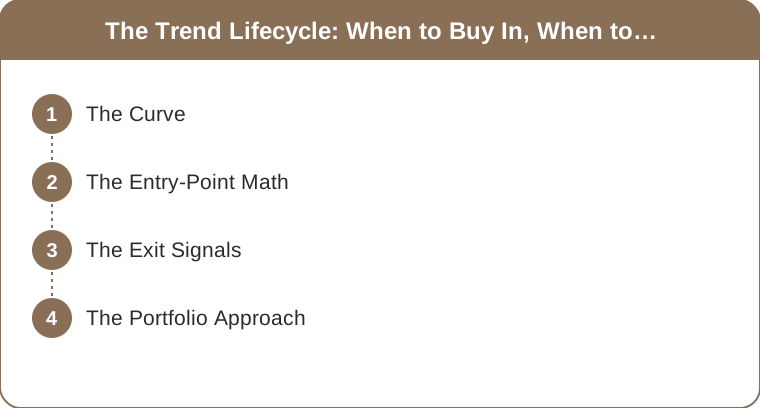
Every trend runs the same lifecycle — runway, early adopters, saturation, discount rack, nostalgia — and the buying decision is really a TIMING decision. Reading the curve: where a trend sits, the entry-point math and the signals that say the wave already broke.

The Curve
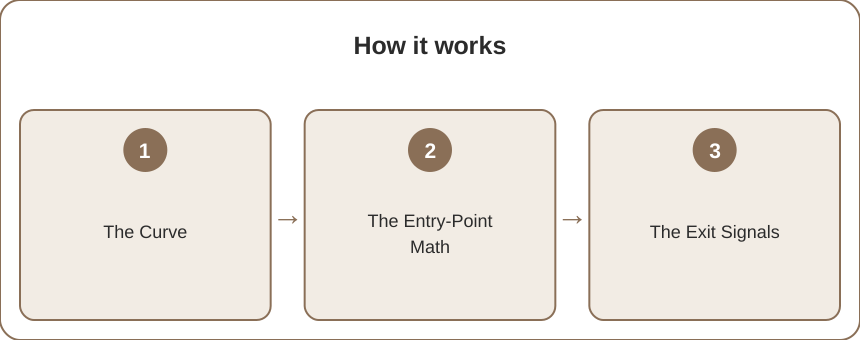
The lifecycle stages: the runway-and-editorial origin (twelve-plus months from street reality), the early-adopter street phase (the trend at its most interesting), mass saturation (every retailer, every price point — the peak), and the descent (the discount rack’s arrival announces it). Each stage has a different correct action; the mistake is buying the SAME way at every stage.
The Entry-Point Math
The timing decisions: early entry (the fast-fashion audition — cheap, per the test-kitchen treaty; if the trend and you get along, the quality version follows), peak entry (fine for accent-tier pieces, wrong for investment — the saturation price premium buys the shortest remaining runway), and the deliberate skip (the trend that contradicts your uniform formula was never your trend — the sitting-out is a styling decision, not a failure to keep up).

The Exit Signals
Reading the descent: the discount-rack census (the trend at 60% off is the wave breaking), the saturation fatigue in your own eye (when the piece starts reading ‘everywhere’ instead of ‘interesting’, the eye is early data), and the personal sunset rule (the trend piece that stops earning reaches retire-or-ignore — wearing it PAST the trend is either dated or signature, and confidence decides which).
The Portfolio Approach
The trend allocation: the accent-rotation slot handles trends by design (the 2-1-1 palette’s rotating seat — one trend at a time, cheaply, seasonally), the classics portfolio stays trend-immune, and the revival clause (trends cycle back in 20-year orbits — the archived piece occasionally re-enters as vintage credibility; the keep-box earns its shelf). Trends were always weather — the wardrobe just needs a climate.
Read the stage, audition cheap, invest never at peak, exit on saturation. Trends were always timing problems — the lifecycle map just posts the schedule.
Keep Reading
This article is for general styling and informational purposes only. Trends, sizing, availability and pricing may vary by brand and season.